How to establish a Dispute Avoidance Board
Most project owners wait too long before thinking seriously about dispute avoidance.
By the time a formal dispute has emerged, project positions are often entrenched. Formal legal advice will usually have been received. That can make it harder for a party to explore commercial solutions that appear to conflict with its legal advice, even when those solutions would yield a better project outcome.
The better approach is to establish a Dispute Avoidance Board — or DAB — at the outset of the project, and to use it proactively throughout project delivery.
A well-structured DAB does much more than decide disputes. It helps the parties identify potential issues early, keeps difficult conversations productive, prevents administrative drift from hardening into entrenched positions and, where necessary, makes interim binding decisions that preserve cash flow and project momentum.
DRBF Region 3, which covers Australia and New Zealand, has developed a new simplified template dispute resolution clause for contracts that wish to utilise a DAB. I drafted the updated clause for DRBF Region 3. The clause is intended to work with the DRBF’s template DAB Agreement. Links to both are provided at the end of this article.
The purpose of this article is to explain how a project owner, contractor or other project participant can establish a DAB successfully — and how the new DRBF clause and template DAB Agreement can be used to support that process.
What is a Dispute Avoidance Board?
A Dispute Avoidance Board is an independent body appointed for a project to assist the parties in avoiding and resolving disputes.
The best-practice model has two distinct functions:
a dispute avoidance function; and
a decision-making function.
The first function is the more important one.
A DAB should not simply sit on the sidelines waiting for a formal dispute to be referred to it. Its real value lies in helping the parties identify emerging issues early, before those issues become disputes. That requires regular engagement with the project, routine meetings with the parties, an understanding of the project's progress, and a willingness to ask difficult questions before they become pleaded positions.
The decision-making function remains important. If a dispute cannot be resolved consensually, the DAB can make a decision. Under the new DRBF clause, that decision is immediately binding unless and until it is revised through amicable settlement, arbitration or court proceedings. The parties must comply with the decision pending that later outcome, including by making any payment required by the decision.
However, if the DAB is doing its job well, most, if not all, issues will be resolved before a decision is needed.
Why the timing matters
The decision to adopt a DAB is ordinarily initiated by the project owner when it is preparing its request for tender documents, including the draft contract.
That is the right time to do it.
If the project owner does not include the DAB structure in the tender documents and draft contract, it becomes much harder to put the best-practice model in place later.
Major infrastructure disputes rarely emerge suddenly.
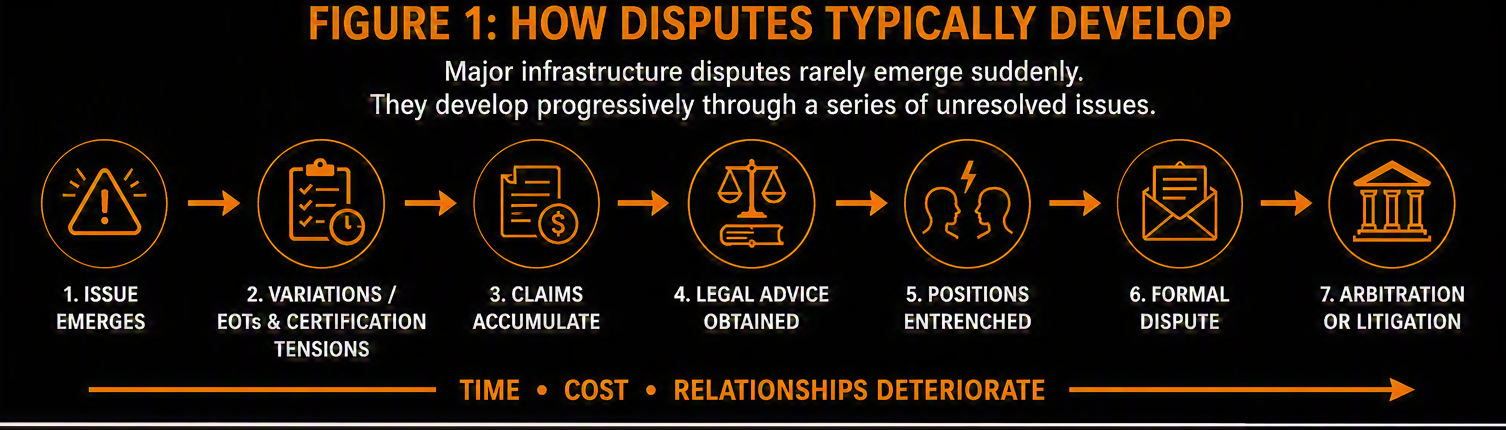
Figure 1: How disputes typically develop
They usually develop progressively through accumulated claims for variations, extensions of time and additional payment, programme drift, interface complexity, certification tensions and increasingly entrenched commercial positions.
If the parties wait until a formal notice of dispute has been given under the contract before establishing the DAB, the opportunity for low-cost amicable resolution has usually passed.
The project owner should therefore:
include a DAB clause in the draft project contract;
include the draft DAB Agreement in the request for tender documents; and
explain in the tender documents the proposed process for selecting and appointing the DAB members.
The project owner will ordinarily need to commence the process of identifying potential DAB members before it has identified a preferred contractor, so that the process for jointly selecting and appointing DAB members does not delay the award of the project contract.
The DRBF template clause is designed to support this process. It provides a relatively simple contractual gateway into the DAB regime, with the details of the DAB’s functions, meetings, and decision-making process set out in the DAB Agreement.
The new DRBF clause: a simpler gateway into the DAB model
The updated DRBF template clause has been deliberately simplified.
Earlier forms of DAB clauses often required parties to make multiple choices about the structure and operation of the DAB. That level of optionality can be useful for sophisticated users, but it can also become a barrier to adoption. If parties need to resolve too many design questions before they can include a DAB clause in a draft contract, the DAB may be omitted altogether.
The new clause takes a different approach. It reflects what DRBF Region 3 regards as a best-practice model and removes optional, unnecessary complexity.
That simplification matters. A DAB clause needs to be easy for project owners to adopt, easy for tenderers to understand, and clear enough to survive the pressure of contract negotiations.
The clause assumes that:
the DAB has both a dispute avoidance function and a decision-making function;
a DAB decision is binding unless and until revised through amicable settlement or subsequent dispute resolution proceedings;
either party may give a notice of dissatisfaction within four weeks after receiving a DAB decision;
even if a notice of dissatisfaction is given, the parties must comply with the DAB decision pending the outcome of the subsequent proceedings; and
if a party fails to comply with a DAB decision, the other party may seek summary or other expedited relief without first needing to refer that failure back to the DAB.
Each of those assumptions can be changed for a particular project, but the point of the template is that parties do not need to start from a blank page.
The core features of the best-practice DAB model
1. All DAB members should be jointly appointed
The best-practice model is that all DAB members are jointly appointed by the contract parties.
That is preferable to a model where each party appoints one member and those two members select an independent chair.
The problem with party-appointed models is not necessarily that the members will act inappropriately. The more subtle problem is that the appointment structure can create a perception that the party-appointed members are there to represent, or at least be sympathetic to, the interests of the party that appointed them.
That perception is inconsistent with the proper role of a DAB member. Every DAB member should be independent and impartial. Each member should be appointed for the value they bring to the board as a whole, not because one party expects them to influence the board from within.
Joint appointment reinforces that principle.
It also helps the parties develop confidence in the DAB as a genuinely independent presence within the project governance rhythm, rather than a quasi-adversarial tribunal assembled only when the relationship has deteriorated.
2. The DAB should be standing, not ad hoc
A DAB should be established when the project contract is signed, not after the first notice of dispute is given.
That distinction is critical.
An ad hoc board appointed after a dispute arises may still be useful as a decision-maker, but it will usually be too late for it to perform a meaningful dispute avoidance role. By then, the parties may already have exchanged claims, obtained legal advice, commissioned expert reports, briefed senior management, made assumptions on how the dispute will be resolved and allocated internal responsibility for the assumed outcome.
A standing DAB can operate differently.
It can follow the project from the beginning. It can understand the commercial background, the personalities, the programme, the technical pressure points and the contract administration issues. It can see where the parties are talking past each other. It can encourage early discussion of potential solutions before formal claims are made.
The DRBF template DAB Agreement expressly contemplates a DAB with both dispute avoidance and decision-making functions. That structure only reaches its full potential if the DAB is established early enough to understand the project and its issues before disputes crystallise.
3. The DAB should be proactive and inquisitorial
The dispute avoidance function requires a different mindset from adjudication, arbitration or litigation.
A DAB exercising its dispute avoidance function should not wait passively for a dispute to be referred for a decision. It should be prepared to ask questions, identify emerging issues, request further information and encourage the parties to address matters that may not yet have received sufficient senior attention.
The DRBF materials describe dispute avoidance activities that include encouraging joint presentations on project progress and issues, discussing issues with a view to assisting amicable resolution, encouraging the parties to look ahead, raising issues that the DAB considers are not being reported or addressed, requesting reports or materials, requesting special presentations on risk areas, and encouraging additional meetings or workshops.
This is one reason why not every experienced adjudicator, arbitrator or former judge will necessarily make an effective DAB member. The dispute avoidance function requires a proactive and facilitative mindset that differs from a traditional adjudicative role.
4. The DAB can provide advisory opinions
The DRBF template DAB Agreement contemplates that the DAB will provide a written advisory opinion upon joint request by the parties. The advisory opinion is not a DAB decision. It is non-binding and is provided on a confidential and without prejudice basis.
That can be very useful.
For example, the parties may disagree on whether a contractor is entitled to relief for latent conditions, a change in law event or delay caused by a third-party utility provider. Rather than refer the entire dispute for a formal decision, they may jointly seek an advisory opinion on the entitlement issue. Once they understand the DAB's view on entitlement, they can often resolve the quantum consequences themselves.
This can be far more efficient than forcing every issue into a formal dispute process. It also preserves party ownership of the outcome. The DAB helps the parties unlock the problem, but the parties still resolve it commercially.
5. DAB decisions should be interim binding
If a dispute is referred to the DAB for a decision, the decision should have practical effect.
Under the DRBF template clause, a DAB decision is immediately binding on both parties and must be given effect unless and until it is revised through amicable settlement, an arbitral award or a court judgment. If a notice of dissatisfaction is given, the parties must still comply with the DAB decision pending the outcome of the later proceedings, unless the arbitral tribunal or court decides otherwise.
That interim binding effect is important.
Without it, a DAB decision may become little more than a non-binding recommendation that the disappointed party can ignore. That undermines the utility of the process.
Interim binding decisions preserve project momentum. They reduce the ability of one party to withhold compliance while the dispute is re-litigated. They also provide a practical foundation for commercial resolution, because the parties know what position will apply unless and until a different outcome is reached.
6. The DAB’s role does not end when it gives an opinion or decision
One of the underappreciated advantages of a standing DAB is that it remains engaged with the project.
An expert determiner, judge or arbitrator will usually finish their job when the written determination, judgment or award is issued. The decision may resolve the legal issue, but it does not necessarily help the parties implement the result, rebuild the working relationship or prevent the same issue from recurring in a different form.
A DAB can do more.
After issuing an advisory opinion or decision, a standing DAB can help the parties understand how to implement the outcome in practice. It can encourage the project team to restore working relationships. It can help the parties shift from dispute mode back to delivery mode.
That is particularly valuable on long-running infrastructure projects, where the parties may need to continue working together for years after a dispute has been decided.
Key takeaway
A DAB is not established to resolve disputes after they arise.
It is established to prevent issues becoming disputes in the first place.
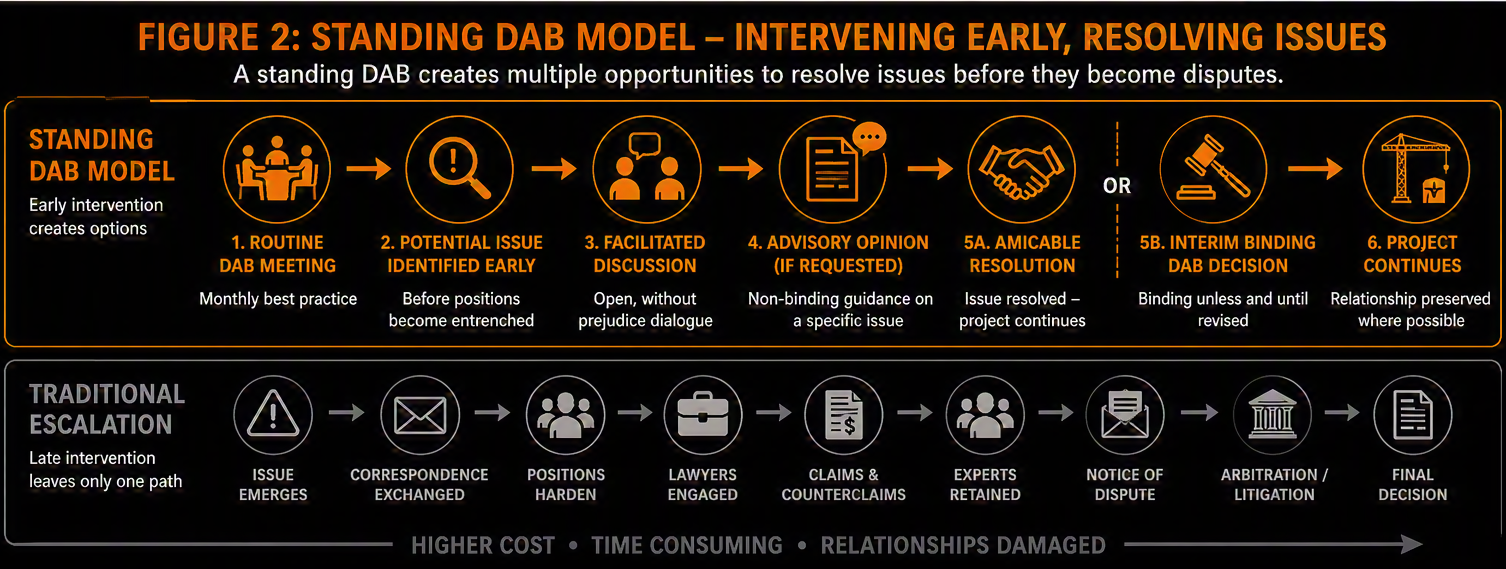
Figure 2: Standing DAB v Traditional dispute escalation
How a project owner should establish a DAB
Step 1: decide before issuing the request for tender
The project owner should decide whether to use a DAB before issuing the tender document.
The decision should not be deferred until after contract award. At that stage, the owner may have lost the opportunity to embed the DAB properly into the contract structure, tender evaluation process and project governance model.
The tender documents should explain the owner’s proposed DAB arrangements including how the DAB members will be selected, and identify the form of DAB Agreement the parties will be expected to sign.
Step 2: include the DAB clause in the draft contract
The owner should include the DAB clause in the draft project contract issued with tender documents.
The DRBF template clause is designed for this purpose. It provides a concise contractual mechanism to establish the DAB and to connect the project contract to the separate DAB Agreement.
The clause should be carefully checked against the definitions, any existing dispute-resolution provisions, and the contract administration machinery in the relevant project contract. The template is not intended to be dropped into every contract without review.
Step 3: include the draft DAB Agreement in the tender documents
The project owner should also include the draft DAB Agreement in the tender documents.
The clause is only the gateway. The DAB Agreement is where much of the operating machinery sits.
The DRBF’s Australia and New Zealand model documents include template DAB Agreement materials in Word format that can be customised for a particular project.
Including the draft DAB Agreement in the tender documents is important because tenderers need to understand:
how the DAB will be appointed;
what functions the DAB will perform;
how routine meetings will operate;
how advisory opinions may be sought;
how formal decisions will be made;
what information the parties must provide; and
how costs will be shared.
Step 4: explain the proposed selection process
The request for tender should explain how the owner proposes to select and appoint the DAB members.
A common approach is for the owner to seek expressions of interest from potential DAB members before issuing the request for tender for the project contract. The owner can then include in the tender documents a list of potential DAB members who are acceptable to the owner, while allowing tenderers to propose other candidates.
That approach has several advantages.
It gives tenderers visibility over the owner’s expectations. It allows the owner to identify candidates with appropriate project experience. It also starts the conflict-checking process early.
However, the process must be handled carefully. The owner should avoid creating the impression that the DAB has been pre-selected by the owner. The final appointment should be made jointly by the parties.
Step 5: manage conflicts early
The project owner should endeavour to ensure that the potential DAB members identified in the request for tender do not have conflicts of interest that would make them unsuitable for the role or unacceptable to the successful tenderer.
That will be easier when the owner issues the request for tender to a select or shortlisted group of tenderers.
It will be more difficult in a public tender, where the owner may not know the identity of all potential tenderers.
Conflict checking should therefore begin early and should be refreshed once tenderers are known.
What skills should a DAB have?
A three-person DAB is usually preferable for major projects
For major infrastructure projects, a three-person DAB will usually be preferable.
It is difficult — almost impossible — to find a single person who has all the attributes needed for a complex project. The “unicorn” DAB member would need deep experience in construction law, project delivery, engineering, contract administration, commercial management, programming, quantum, leadership, facilitation and dispute resolution.
That person may exist, but a project owner should not design its dispute avoidance strategy around finding one.
A three-person board allows the parties to combine complementary skills and perspectives.
Front-end legal experience is especially valuable
A DAB should include at least one member with strong front-end legal experience in the interpretation, administration and drafting of major project and construction contracts.
In my experience, this capability is frequently underrepresented on DABs.
Many project disputes are ultimately driven by questions of contractual entitlement, contract administration, governance, risk allocation and documentation rather than technical engineering issues.
In many cases, the engineering issue is not the dispute. The dispute arises because the parties disagree about who bears the contractual consequences of that engineering issue.
A lawyer with genuine front-end and delivery-phase experience can help the board understand how the contract was intended to operate in practice. That experience is also valuable if the parties reach a settlement.
Resolving the commercial issue is only part of the task. The settlement may need to be documented through a side letter, settlement deed, deed of amendment, variation agreement or change order. Poor documentation of an agreed outcome can conflict with existing arrangements or create an entirely new dispute.
A DAB member with front-end legal experience can help the parties understand what needs to be captured and suggest how to document it, even if the parties’ own lawyers ultimately prepare the documents.
Technical and delivery experience also matters
A DAB must understand how projects are delivered.
That usually requires members with engineering, commercial or project delivery experience. The board needs to understand programme pressure, interface risk, design development, site constraints, change management, supply chain disruption, commissioning risk, and the practical realities of administering a contract under pressure.
For complex infrastructure projects, the DAB should ideally include people who have worked on projects from the inside, not merely those who have determined disputes after the event.
Programming and quantum skills are useful, but not always essential
Programming and quantum experience can be useful on a DAB, but those skills should not be overstated.
In a formal dispute, the DAB will ordinarily have the benefit of the parties’ own delay, programming and quantum submissions. The parties may provide expert reports. The DAB may also be able to engage an independent expert with the consent of the parties if specialist assistance is needed.
For that reason, it will not always be necessary to have a dedicated delay expert or quantum expert as a DAB member.
The more important question is whether the board as a whole has the judgment and experience to understand expert material, test assumptions, identify the real issue, and assist the parties in resolving or deciding it efficiently.
Decision-makers are not always dispute avoiders
When selecting DAB members, parties should distinguish between those who are good at deciding disputes and those who are good at avoiding them.
The best DAB members can do both.
Some experienced arbitrators, adjudicators, expert determiners and former judges may be excellent decision-makers. However, the dispute avoidance function requires a different skill set. It requires a willingness to engage with project realities before a dispute has crystallised, identify emerging issues, ask difficult questions and facilitate early resolution discussions. The best DAB members combine both capabilities.
The selection process should therefore test not only candidates’ credentials but also their understanding of the dispute avoidance role.
Key features of the DRBF template DAB Agreement
The DAB clause is intentionally concise. The DAB Agreement contains much of the detail that makes the model work.
Routine DAB meetings
The DRBF template DAB Agreement contemplates the DAB performing its dispute avoidance role through routine engagement with the parties. The dispute avoidance function includes encouraging joint presentations on project progress and issues, looking ahead to identify potential issues, raising issues that the DAB considers are not being addressed, requesting reports or materials, and encouraging additional meetings or workshops.
In practice, monthly routine DAB meetings are best practice for major projects.
The value of a routine DAB meeting is often greatest when there is no active dispute. That is usually when the board has the best opportunity to identify emerging issues before positions become entrenched.
Those meetings should be held on a confidential and without prejudice basis. That allows the parties to speak more openly about emerging issues without fearing that every statement will later be used as an admission in formal proceedings.
The meetings should be structured, but not overly formal. The objective is to identify and resolve issues early, not to rehearse legal submissions.
Timing of meetings
Routine DAB meetings should often be scheduled immediately after project control group meetings or equivalent senior project governance meetings.
That timing has practical advantages.
The parties will already have current project information available. Senior project personnel will already be focused on project performance, programme, cost, risk and interface issues. The DAB can then discuss emerging concerns while the relevant information is fresh and before issues drift into correspondence-based dispute management.
Who should attend?
Each party should be represented at routine DAB meetings by its most senior on-site project director and by an off-site executive to whom the project director reports.
The second attendee is important.
Many disputes become harder to resolve because they are managed only at project level. Project directors are often deeply invested in the day-to-day history of the issue. They may also be constrained by project budgets, reporting lines or prior positions.
Having an off-site executive involved gives each organisation a broader commercial perspective. It also helps ensure that emerging disputes receive senior attention before they become formal claims.
Advisory opinions
The DAB Agreement allows the parties to request advisory opinions. An advisory opinion is not a formal decision, and the DRBF template DAB Agreement provides that it is confidential and without prejudice.
This process can be particularly useful where the parties need guidance on a discrete issue, but do not want to escalate the entire disagreement into a formal dispute.
Advisory opinions work best when the parties discuss the questions on which an advisory opinion will be sought with the DAB before formally requesting the opinion.
Decision-making process
The DAB Agreement also contains rules for the formal decision-making process. These include rules for preliminary conference procedures, statements of dispute, submissions, responses, agreed facts, procedural directions, conferences, and making the decision.
Those rules matter because a DAB decision must be made efficiently and fairly.
The decision-making process should not replicate the full complexity of arbitration or litigation. But it must give each party a reasonable opportunity to present its case, respond to the other party’s case, and provide relevant evidence.
The process should be proportionate to the dispute. The rules permit this via procedural directions and agreed process modifications.
The DAB as part of project governance
The most successful DABs are integrated into project governance.
They are not treated as an external dispute tribunal that appears only when things go wrong. They are part of the project’s governance architecture.
That does not mean the DAB manages the project. It does not.
The parties remain responsible for delivery. The superintendent, principal’s representative, contractor’s representative, project control group and executive governance bodies continue to perform their usual roles.
But the DAB gives the project an independent forum where issues can be ventilated early, tested constructively and resolved before they become entrenched disputes.
For the DAB to perform that role, the parties must use it.
They must be willing to share information, identify emerging risks, raise issues before they become claims, and treat the DAB as a project resource rather than merely a dispute forum.
Who can help establish and operate a successful DAB?
Establishing a successful DAB requires more than inserting a clause into a contract.
Project owners may require assistance to:
adapt the DAB clause and DAB Agreement;
design the appointment process;
identify suitable DAB members;
negotiate fee arrangements with DAB members;
manage conflicts;
establish meeting protocols; and
integrate the DAB into project governance arrangements.
Contractors and other project participants may need assistance during project delivery to:
prepare for routine DAB meetings;
identify issues appropriate for DAB involvement;
obtain advisory opinions;
prepare for DAB decision-making processes; and
implement advisory opinions or DAB decisions.
I have extensive experience establishing, structuring and supporting dispute avoidance arrangements on major infrastructure projects, including projects involving multiple contracts, significant interface risks and complex stakeholder environments.
I am the Principal of Infralegal and a member of the Executive Body of DRBF Region 3 (Australia and New Zealand). I also drafted the updated DRBF Region 3 template dispute resolution clause for DABs.
I am available to assist as:
an independent DAB Chair or DAB member;
an adviser to project owners establishing DAB arrangements;
an adviser to contractors, principals or other project participants operating within a DAB framework; or
a strategic adviser helping parties avoid disputes, manage emerging issues and implement DAB outcomes.
Conclusion
A DAB is not just another dispute resolution process.
Used properly, it is a project delivery tool.
The best DABs help parties identify issues early, test assumptions, obtain guidance where useful, resolve disagreements before positions harden, and maintain project momentum when decisions are needed.
The new DRBF template clause makes it easier for project owners to adopt that model. But the clause is only the starting point. The real value comes from establishing the DAB early, selecting the right members, using routine meetings effectively, and treating the DAB as part of the project’s governance architecture.
For major projects, the question should not be whether the parties need a mechanism to resolve disputes after they arise.
The better question is what structure will give the project the best chance of avoiding those disputes in the first place?
The most successful DABs are not those that make the best decisions. They are the ones that rarely need to make decisions because they help the parties identify and resolve issues before they become disputes.